Pickleball Courts in Houston, TX

Player-friendly pickleball courts engineered for consistent bounce, secure footing, and Gulf Coast weather resilience.

Pickleball demand in Houston keeps expanding across every age group, and many players now want reliable court access at home or within their community amenities. Home Turf Houston designs and installs pickleball courts for residences, clubs, and private facilities with a focus on surface consistency, line accuracy, and day-to-day usability. Whether your goal is social play with neighbors or structured practice sessions, we build courts that support repeat use without forcing constant maintenance work.

Houston weather makes sub-base and drainage quality non-negotiable for pickleball performance. Sudden rain, high humidity, and prolonged heat can expose weak construction quickly. We address that from the start by matching base depth, slope strategy, and edge detailing to your property conditions. A court that drains correctly and stays stable under changing moisture levels is safer to play on and more predictable for ball response, especially during heavy use months.

Clients in Memorial and River Oaks often prioritize premium aesthetics and integrated lighting, while Katy and broader suburban projects often focus on maximizing play area within active family yards. We design for both patterns. In every case, we treat orientation, noise considerations, and accessory choices as practical design variables, not secondary add-ons, so your finished court performs well and fits your real routine.

Court Performance: Bounce, Traction, and Player Confidence

Pickleball players notice small inconsistencies immediately. A slight low spot, uneven texture, or unclear line edge can disrupt rallies and increase frustration. Our process emphasizes precision in grading and finish installation so the ball response remains dependable across the entire playing zone. That consistency matters for both social play and skill development because players can trust movement patterns and shot outcomes instead of compensating for surface defects.

Traction planning is equally important in Houston humidity, where surface moisture and airborne debris can alter foot feel quickly. We help clients choose systems that balance grip with controlled slide characteristics, then pair those choices with maintenance practices that preserve performance. A court that feels good in ideal weather but becomes unpredictable during humid mornings is not a successful build. We aim for reliable play windows across realistic local conditions.
Noise, Orientation, and Neighborhood Fit

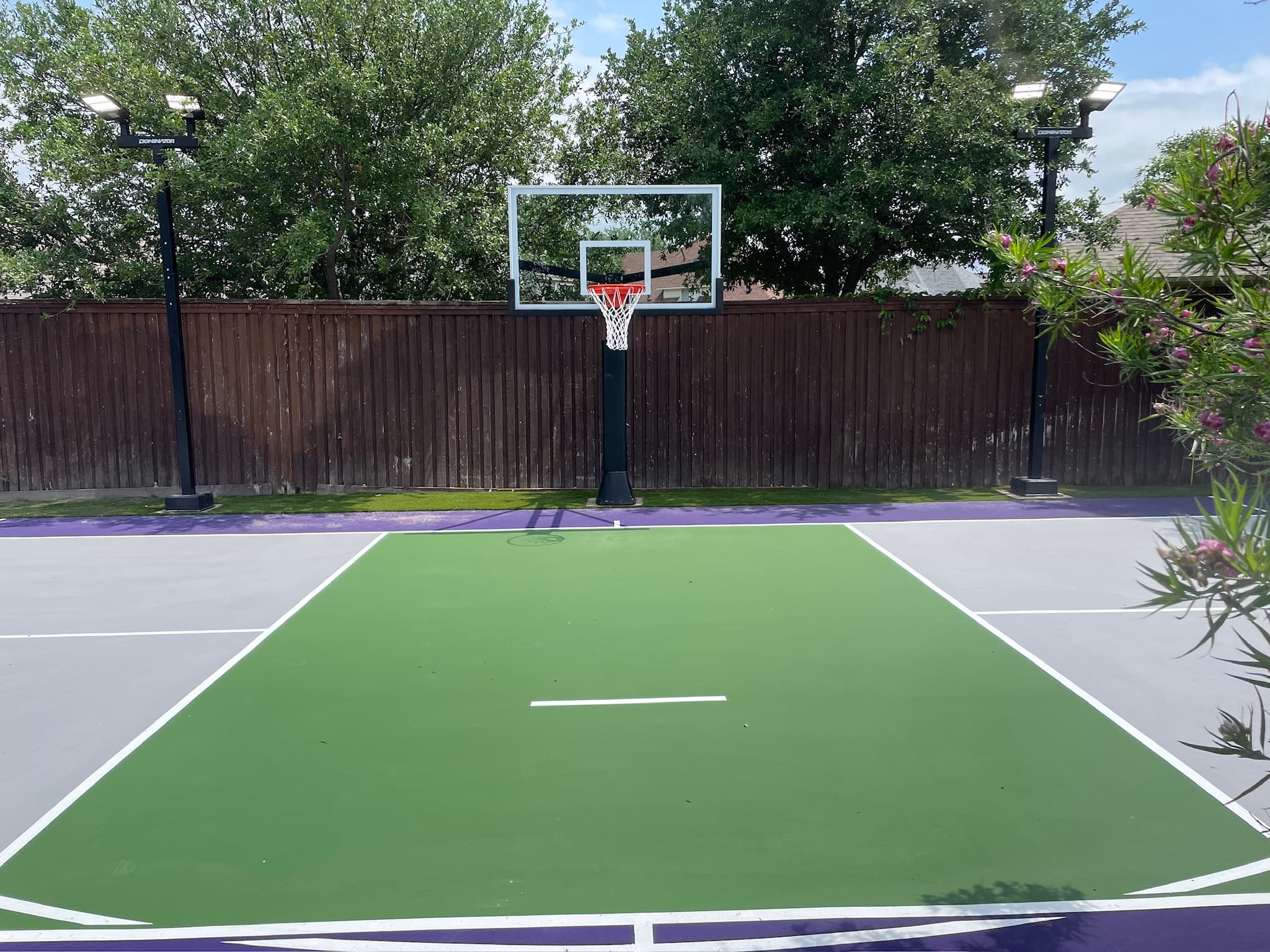
Pickleball acoustics can affect neighbor relationships, especially on smaller urban lots. During planning, we review court orientation, setback strategy, fencing materials, and optional noise-mitigation approaches to reduce impact without compromising play. In high-density neighborhoods, these decisions can determine whether a project remains easy to enjoy long term.

Sun angle and wind direction also influence court comfort. We evaluate orientation options to reduce glare during peak play times and improve visibility for both casual and competitive sessions. Lighting packages are then aligned with that orientation so evening play has balanced illumination without excessive spill. Good orientation planning improves player experience every day and lowers the likelihood of expensive retrofits later.

From Backyard Amenities to Club-Scale Installations

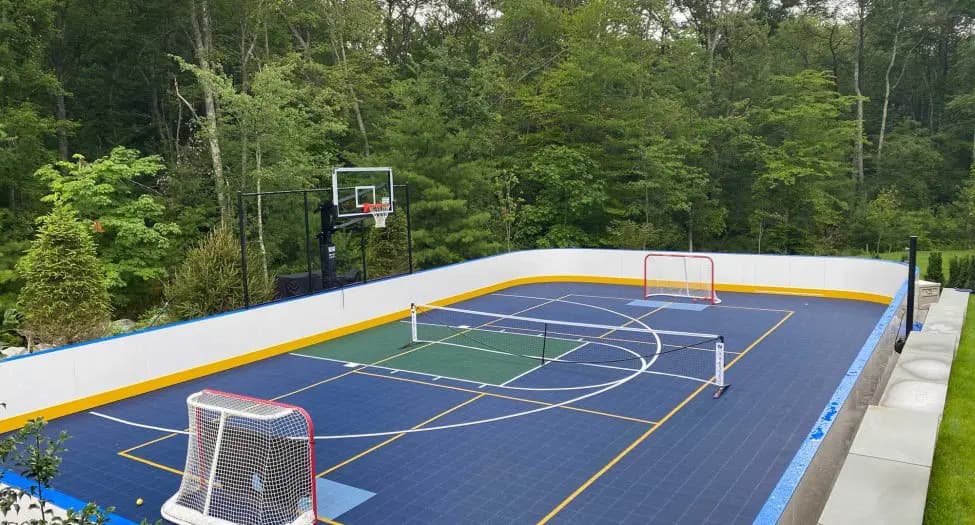
Residential projects often prioritize efficient footprints, quick conversion to other games, and clean integration with patios, pools, and landscape design. We tailor these builds so owners can host friends, train consistently, and keep the court visually cohesive with the rest of the property. The best backyard courts feel purpose-built rather than added as an afterthought.

For clubs, HOAs, and private facilities, we scale the same principles to higher traffic and broader user groups. That includes durable edge construction, circulation planning between courts, and maintenance frameworks that match staffing realities. In both settings, the objective is not just installation completion; it is long-term play quality with predictable operating demands in Houston's climate.

Building for Fast Rallies, Noise Control, and Two-Court Options

Pickleball courts succeed when the kitchen, baselines, and sidelines stay visually clear during fast rallies. We use line hierarchy, contrasting colors, and careful court orientation so players can read the space instantly, even when the pace picks up. That matters in Houston neighborhoods where a backyard court may be used by different skill levels throughout the week. A court that feels intuitive helps new players relax and gives experienced players the clean boundaries they need for faster, more confident play.

Noise management is part of the design conversation as well. On smaller lots near other homes, we look at fence height, setback distances, and how the court sits relative to bedrooms, patios, and shared walls. For owners who want more capacity, we can plan single-court or two-court footprints that support doubles rotation without crowding the playing area. The goal is to create a court that works for the people who will use it every week, not just the person signing off on the drawings.

Surface Comfort, Court Density, and Community Use

Pickleball grows fastest when the court is comfortable enough for repeated sessions and simple enough for casual players to understand immediately. That is why we pay attention to underfoot feel, visual spacing, and how many players will share the space during a typical Houston week. A compact court might be the right answer for a single household, while a more generous layout can make sense for family reunions, HOA common areas, or clubs that rotate multiple pairs through the same footprint. The court should match the actual traffic pattern, not a hypothetical tournament crowd.

Community use also changes the design brief. If neighbors will be invited over often, the court needs clean arrival paths, a place to set bags and chairs, and enough buffer to keep gameplay calm even when spectators are nearby. If the court is for a private training routine, the priority may shift toward a tighter footprint and stronger lighting for early evening drills. We plan for those differences so the finished pickleball court behaves like a useful part of the property rather than a single-purpose object.

Weather, Wind, and Paddle-Sport Convenience

Pickleball looks simple, but the court design has to account for a lot of variables if it is going to feel good in Houston. Wind direction, sun angle, and the way heat reflects off nearby hardscape all change how comfortable the court is from one part of the day to another. We use those factors to choose orientation and edge conditions that make play easier to enjoy instead of forcing players to fight the environment every time they step on the court.

Convenience is the other half of the equation. A court should make it easy to grab paddles, rotate players, and keep a casual game moving without constant setup. That is especially important in neighborhoods where the court will be used often but not always by the same group. When the space is intuitive, neighbors are more willing to use it, and owners get more value from the court because it becomes part of normal social life instead of a feature that requires planning every time.

Benefits of Pickleball Courts

Reliable Year-Round Access

Play on your own schedule without depending on full public courts or uncertain reservation windows.

Consistent Ball Response

Proper grading and surface installation support predictable bounce for better rallies and training sessions.

Safer Footing in Variable Conditions

Surface and drainage planning improve confidence during humid, post-rain, and high-use periods.

Customizable to Skill and Space

Choose full-court or compact layouts with optional multi-use markings depending on your property goals.

Strong Amenity Value

Private and community pickleball courts increase recreation utility and boost perceived property appeal.

Efficient Maintenance Profile

Routine care is straightforward when the court is built correctly from the base up.

Our Pickleball Courts Process

1

Program and Site Consultation

We define use type, user profile, and lot constraints to shape dimensions, orientation, and accessory needs.

2

Drainage and Grading Engineering

Slope and runoff plans are finalized to keep the court playable after Houston rain events.

3

Base and Edge Construction

Structural layers are installed and compacted to stabilize the court and protect long-term surface quality.

4

Surface Finish and Striping

Court surface and lines are installed with attention to visibility, bounce consistency, and clean perimeter transitions.

5

Final QA and Turnover

We review play readiness, lighting and equipment function, and provide practical maintenance guidance.

Applications

Backyard Pickleball Courts

Private home courts designed for family play, training, and social matches.

Luxury Estate Amenities

High-finish courts integrated with pools, outdoor kitchens, and curated landscape design.

HOA and Community Installations

Shared courts that support broad resident use and predictable maintenance operations.

Club and Resort Recreation

Guest-friendly courts built for repeated traffic and consistent play quality.

School and Church Facilities

Multi-purpose courts that support both organized programming and open recreation.

Why Choose Home Turf Houston

Houston-Specific Engineering

We design pickleball courts around local drainage and soil realities, not generic national defaults.

Precision Layout Execution

Line work, orientation, and equipment setup are handled with player experience in mind.

Flexible Scope Options

From single backyard courts to multi-court community builds, we scale with clear planning.

Practical Noise and Lighting Guidance

We address neighborhood fit and evening usability during design, not after complaints arise.

Long-Term Support

Our team remains available for upkeep recommendations, modifications, and service as usage evolves.

Frequently Asked Questions

Can a pickleball court be combined with another sport?
Yes. We commonly add compatible multi-sport markings while preserving line clarity so pickleball still plays cleanly.
How quickly can we play after rain?
Recovery time depends on weather intensity and site conditions, but proper drainage design significantly improves return-to-play speed.
Do you install courts in both city and suburban areas?
Yes. We build throughout Greater Houston, including River Oaks, Memorial, Katy, Cypress, Sugar Land, and surrounding communities.
Will the court be too loud for nearby neighbors?
We review orientation and mitigation options during planning to reduce noise impact while keeping play quality strong.
Can older players request a more forgiving surface feel?
Absolutely. We help choose systems that support comfort and confidence while maintaining predictable game performance.
How much maintenance is required each month?
Most courts need routine debris removal and occasional cleaning, plus periodic checks of lines, edges, and accessories.

Get a Free Estimate Today

Ready to transform your Houston property with pickleball courts? Contact Home Turf Houston for a free on-site consultation and detailed estimate.

Houston Service Areas

We provide pickleball courts throughout the Greater Houston metro.

View all 40+ service areas →