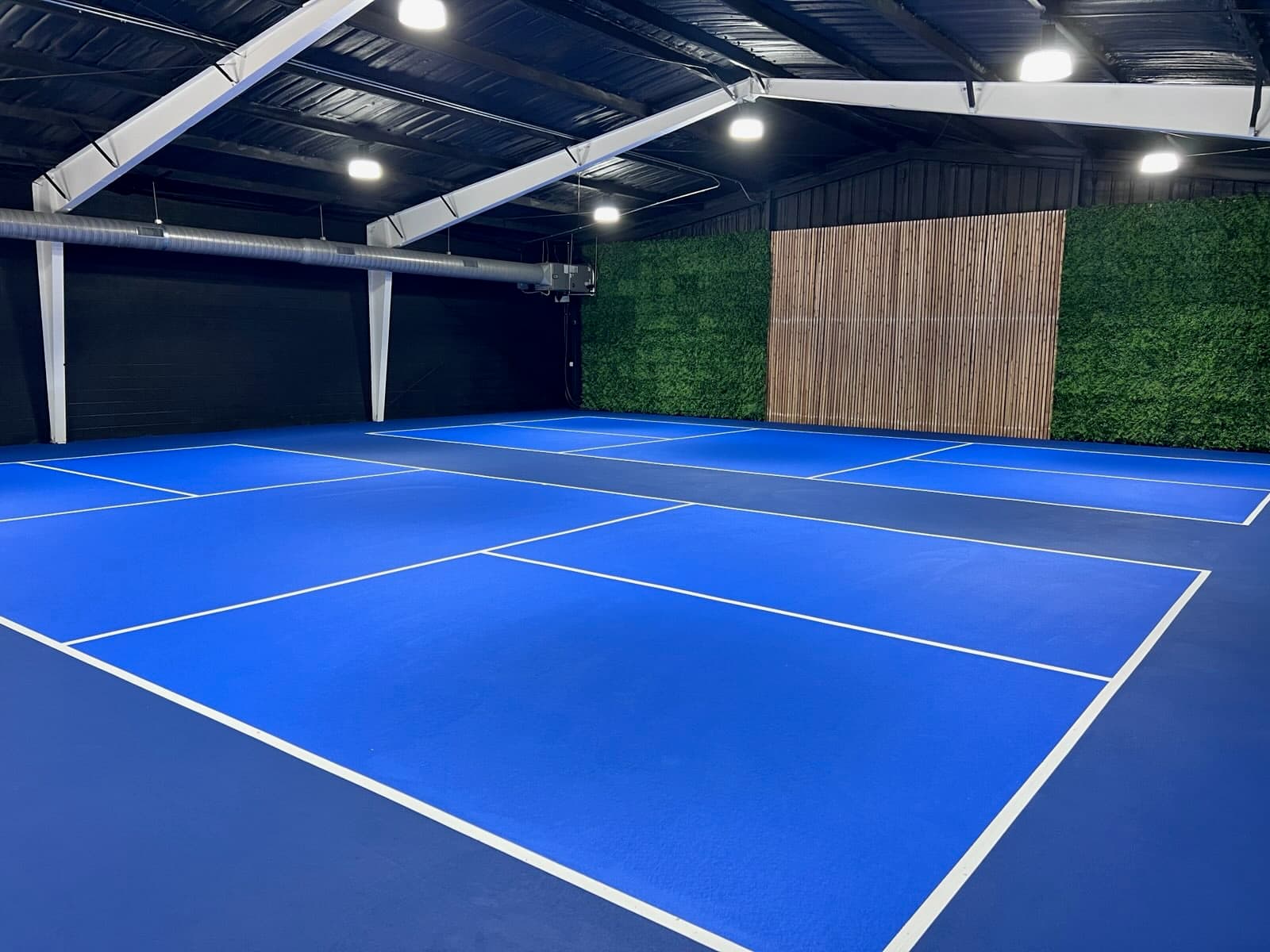
Padel Courts in Houston, TX

Install a high-use glass-enclosed padel court built for Houston rain, heat, humidity, and social racquet play.

Padel is a natural fit for Houston properties that need outdoor recreation with energy, accessibility, and social appeal. The court is compact compared with many tennis builds, but the game feels fast and engaging because the glass walls keep rallies alive. Home Turf Houston designs and installs padel courts for private homes, racquet clubs, hospitality properties, schools, and shared amenities that want a modern court experience built around frequent use.

Houston padel courts need careful technical planning. The glass enclosure, steel frame, synthetic turf, infill, drainage profile, lighting, gates, and surrounding circulation have to be coordinated as one system. The Gulf Coast climate adds another layer: heavy downpours, humid air, expansive soils, and long UV exposure can shorten the life of an underbuilt court. We design around those conditions from the first site review so the finished installation plays cleanly and recovers properly after storms.

From River Oaks and Memorial to Katy, Sugar Land, Cypress, The Woodlands, and Pearland, we tailor each padel court to the property and the ownership model. A residential project may prioritize integration with a pool, patio, and landscape plan. A club or community project may need night play, multiple courts, controlled access, and maintenance lanes. The materials and layout should match the way the court will actually be used every week.

A well-built padel court gives players a consistent turf surface, clear walls, reliable rebound, and enough surrounding space for smooth movement before and after play. That combination is what makes the court feel finished, not improvised. We build the details so the sport can do what it does best: bring people together for quick, repeatable, high-energy matches.

Houston Drainage Comes First

A padel court in Houston must be planned around water before anything else. Sudden rain can overwhelm flat or poorly graded recreation spaces, and trapped moisture can create surface inconsistency, odors, slippery zones, and maintenance problems. We study runoff patterns, surrounding hardscape, soil behavior, and available discharge points before base work begins. That lets us build a court that manages storm volume instead of simply hoping the surface dries on its own.

Drainage planning also protects the enclosure. Glass and frame systems depend on stable edge conditions, so water should not undermine the court perimeter or collect at gates and access points. We coordinate base slope, aggregate profile, turf selection, and perimeter details so the court can return to use quickly after normal Houston rain cycles. The result is a court that feels dependable rather than weather-sensitive.
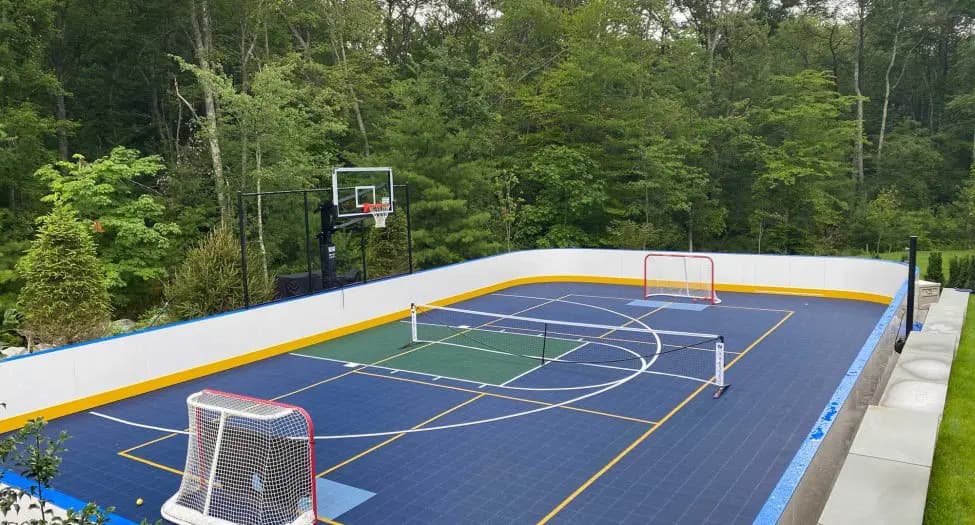
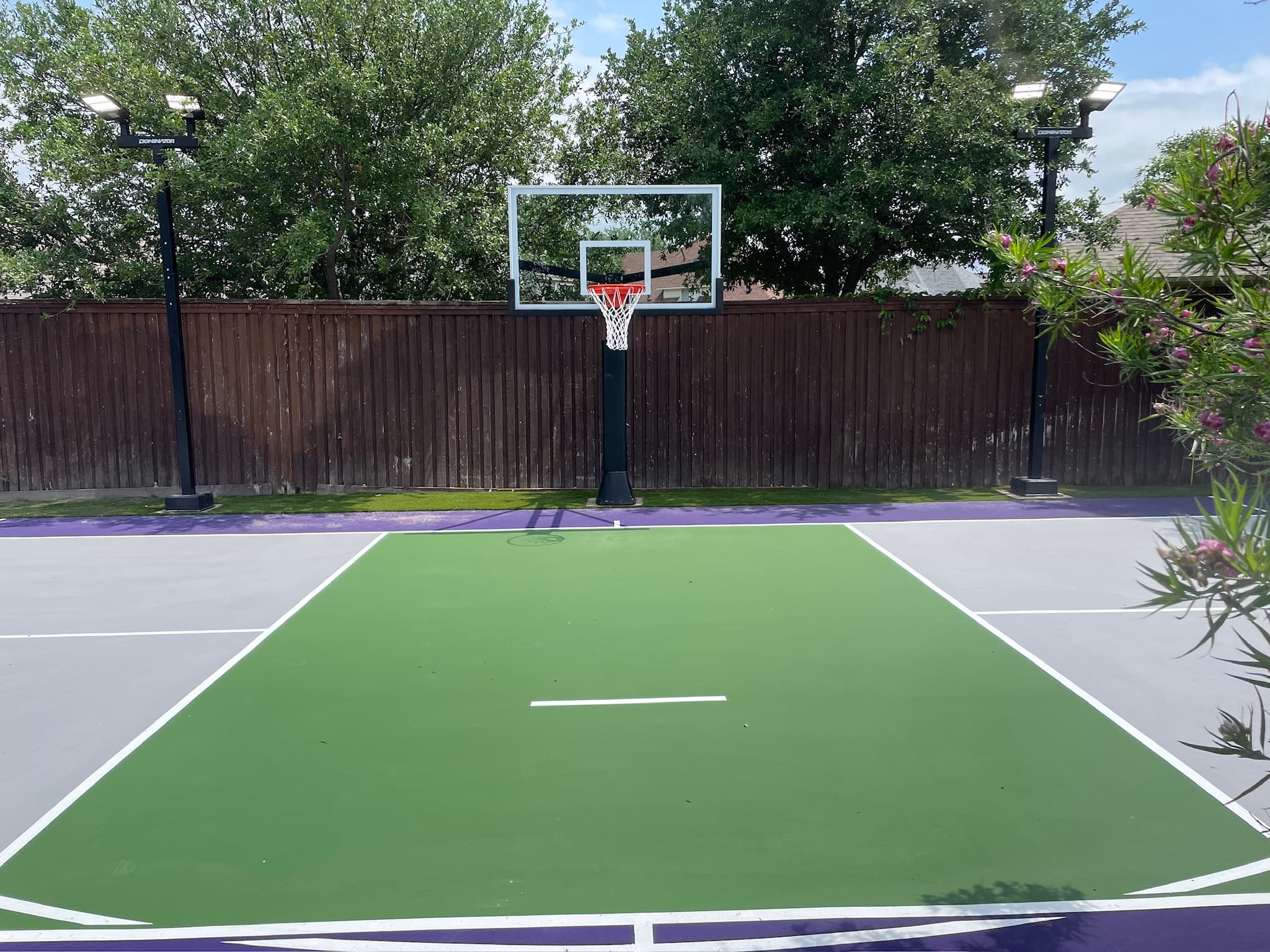
Glass, Frame, Turf, and Lighting as One System

Padel is different from open court sports because the enclosure is part of the game. The glass walls are not decoration; they define rebound, speed, visibility, and the overall feel of the court. That means frame alignment, panel placement, gate location, turf behavior, and lighting all need to support the same play experience. We plan those elements together so the finished court plays as one connected system.

Lighting is especially important in Houston, where evening play is often more comfortable than late afternoon summer play. Fixture placement needs to provide clear ball tracking without glare on glass or unnecessary spill into neighboring properties. We account for that early, along with sightlines for spectators and access paths for players. These details make the court easier to enjoy and easier to operate.

Planning for Private, Club, and Community Use

The right padel court design changes based on how the court will be used. A private backyard court in Memorial may need a quiet, polished layout that connects to outdoor living space. A club installation near Katy or The Woodlands may need multiple courts, waiting areas, lighting schedules, and a maintenance plan that supports daily play. We define those expectations before selecting surface and accessory details.

Padel works well in Houston because it supports short games, doubles play, and easy participation across skill levels. For homeowners, that means more family use and more guest engagement. For shared amenities, it means strong programming potential without requiring every player to be highly experienced. When design and operations are aligned, the court becomes a reliable activity anchor instead of a novelty.

Keeping the Court Comfortable in Heat and Humidity

Houston heat changes how outdoor courts are used. Many owners expect early morning, evening, and shaded-season play to carry the most activity. We consider orientation, lighting, airflow, adjacent planting, and player access so the court fits that rhythm. The synthetic turf and infill profile are also selected for traction, durability, and reasonable upkeep in a humid climate.

Humidity also affects maintenance planning. Debris, pollen, and organic buildup can collect faster than owners expect, especially near trees and planted borders. We provide practical care guidance so the court remains clean and inviting without turning ownership into a weekly burden. A court that is easy to reset gets used more often.

Benefits of Padel Courts

Strong Social Appeal

Padel is easy to pick up and fun in doubles, which makes it ideal for Houston homes, clubs, and shared amenities that want frequent participation.

Compact Premium Court Footprint

The court delivers a full racquet-sport experience in a defined footprint that can fit many properties where a larger court would be difficult.

Houston-Ready Drainage

Base and slope planning help the court handle Gulf Coast rain without chronic puddling or soft perimeter conditions.

Glass-Wall Play Experience

Proper enclosure planning gives players the rebound, visibility, and fast rally rhythm that make padel different from open-court sports.

Evening Play Potential

Lighting can be planned for comfortable after-work matches while reducing glare and unnecessary spill.

High Amenity Value

A polished padel court stands out for luxury residences, clubs, hospitality spaces, and communities that want a modern recreation feature.

Our Padel Courts Process

1

Site Review and Feasibility

We review available space, drainage routes, access, sun exposure, setbacks, and surrounding outdoor features to confirm how a padel court should fit.

2

Layout and Enclosure Design

The glass-wall system, steel frame, gate placement, lighting, and spectator circulation are coordinated before base construction begins.

3

Drainage and Base Work

We excavate, grade, and compact a base profile designed to manage Houston stormwater and support the enclosure over time.

4

Turf and Court System Installation

Synthetic turf, infill, enclosure components, game lines, gates, and accessories are installed with attention to rebound, traction, and finish quality.

5

Final Testing and Care Guidance

We review play feel, wall alignment, drainage behavior, lighting placement, and maintenance routines before the court is turned over.

Applications

Private Residential Courts

Backyard padel courts integrated with Houston pools, patios, turf areas, and outdoor kitchens.

Racquet Clubs and Fitness Clubs

Modern court additions that expand programming and bring a newer racquet sport to existing members.

HOA and Apartment Amenities

Shared padel courts for communities that want an active amenity with broad age and skill-level appeal.

Schools and Youth Programs

Compact racquet-sport courts for PE, after-school activity, and recreational programming.

Hospitality and Resort Spaces

Guest-facing court installations that create memorable on-site activity and social energy.

Why Choose Home Turf Houston

Houston Climate Experience

We account for local rainfall, humidity, soil behavior, and heat when planning every padel court.

Full-System Coordination

Turf, glass, frame, lighting, access, drainage, and finish details are planned together instead of handled in disconnected pieces.

Residential and Commercial Fit

We can design a single private court or a larger shared-use installation with the same performance-first process.

Practical Ownership Guidance

We provide clear care expectations for turf, glass, infill, debris, drainage paths, and accessories.

Player-Focused Layouts

Every detail is shaped around real use, from rebound behavior and lighting to entry flow and spectator placement.

Frequently Asked Questions

What makes a padel court different from pickleball?
Padel is played inside a glass and mesh enclosure, and players use the walls as part of the game. The court dimensions, surface, enclosure, and play style are all different from pickleball.
Can padel courts handle Houston rain?
Yes, when drainage is engineered correctly. We plan base depth, slope, perimeter details, and turf selection around Houston storm conditions so the court recovers more reliably after rain.
Can a padel court fit in a Houston backyard?
Many larger residential properties can support a padel court, but the usable footprint has to include the court, enclosure, access, lighting, and drainage needs. We confirm fit during the site review.
Do padel courts need lighting?
Lighting is not mandatory, but many Houston clients add it because evening play is often more comfortable. We plan fixtures to improve visibility while managing glare and spill.
What surface is used on a padel court?
Padel courts typically use synthetic turf with an infill profile selected for traction, ball response, and durability. We match the turf system to expected use and site conditions.
How do you maintain a padel court?
Routine maintenance includes debris removal, turf grooming, infill checks, glass cleaning, gate and frame inspection, and keeping drainage paths clear.

Get a Free Estimate Today

Ready to transform your Houston property with padel courts? Contact Home Turf Houston for a free on-site consultation and detailed estimate.

Houston Service Areas

We provide padel courts throughout the Greater Houston metro.

View all 40+ service areas →